Tuesday, September 17, 2024
Tuesday, November 17, 2020
Inhale, Exhale
One of my good friends recently asked why I hadn't written any blog posts in a while. I admitted that even though I really enjoy writing in this manner, I just hadn't had the time. "I guess I've felt too busy with life," I said, "I haven't had much breathing room."
"So why don't you write exactly that?" she asked.
Somehow the question startled me. What I had revealed in my simple sharing was not something profound or insightful. It was just a real and honest answer about how I'd been feeling lately. But her question made me wonder: Why not write about something so real and honest?
Sometimes I trick myself into believing that my every blog post has to be some lofty sharing resulting in all sorts of "aha" moments. It doesn't make my posts less authentic, but it does keep me from writing about other topics that I feel aren't as enticing or interesting. Which makes me wonder if I do the same with myself. Do I share only the parts of me that I feel are exciting and interesting? With whom do I share my simple, real, and honest self?
I suppose that's what made my friend's question so startling. I wasn't planning on sharing my simple self. Her question was the impetus that made me ask, Why not? Why not share what's simple?
My life might look exciting to people from the outside. If you look me up on the internet I bet you'll find my various social media accounts; my photo and bio on a website or two; and a number of videos that myself or other organizations have produced. I've been asked to speak for different conferences and with groups of all ages; I have been offered some intriguing job positions; and I have been invited to write reflections on a variety of topics for some wonderful Catholic organizations. But the internet cannot show you who is underneath all of that.
Underneath the media spotlights and before all the labels - Sister, Catholic, Person of Color - I will always simply be Desiré.
I still get overwhelmed. I still wake up sometimes and say to myself, "I wish all of it would just stop." I get tired of the phone and the computer and the work. I get tired of trying and tired of doing. I get tired. I am human.
There are days you'll see me smile and say, "Now there's a woman who loves life." And you would be correct. I do love my life. I love this life. But loving this life doesn't mean I'll always be smiling. It doesn't mean I'll never get tired. I know I will keep going. I will keep working for justice and praying for peace. I will keep learning and unlearning so that I can be better and love better. I will keep getting out of bed, even when it takes me longer than I'd like it to some days. I will keep loving this life, and I will keep giving love in whatever way I can.
But I will still be me. I will still be human and simple and real. I will still have great days and hard days. I will still wish I'd said, "No" to something I just agreed to do while attempting to keep my eyes open on yet another Zoom call.
I may be a smiling Black Catholic Felician Sister with over 4,000 followers on Instagram, but I am still simply human me. There will still be plenty of times I struggle to stop and remind myself: Breathe. Inhale. Exhale. Just breathe.
We all have permission to be human, to be in love with life and to be worn out by it at the same time. That's why we all need reminders to breathe. Maybe this is your reminder, too.
Inhale. Exhale.
Sister Desiré Anne-Marie Findlay
Thursday, July 23, 2020
I Don't See Color
Is that so?
I know I don't speak for all people of color, but for myself and many others, this statement is not consoling. When you tell me you don't see my color, is it because I am invisible to you? Or is it because you would rather not see what makes us different?
I have no problem with my skin color nor do I have a problem with being different. The danger of desiring sameness is that people often mistake sameness for unity. We don't have to be the same to be united. Celebrating diversity is much more beneficial than trying to pretend it doesn't exist.
I realize that some people will say they don't see my color as a way of saying they see beyond the color of my skin. I get it. But I still don't find it comforting. Here's why: my color is part of what makes me who I am. It has shaped my experiences in this world and therefore has shaped my ways of understanding myself and the world. It has also pushed me to be more courageous and outspoken on matters of injustice.
I want you to see my heart, but I also want you to see my color - it contains layers of beautiful cultures that I inherited from my ancestors. I am proud of where I come from and of the people who created the skin tone I now wear. I have roots in Nigeria, Trinidad and Tobago, the Indigenous Americas and Spain. Just as I am proud to be a woman - and to have a heart that loves with a feminine strength - so too does my heart pound with the strength of those who came before me. Why would I deny my heritage, or let anyone else deny it?
I also want you to see my color because there are so many ways that the American culture tries to stomp it out or push it down.
As a dancer, I regularly had to buy make-up and clothing for performances. I didn't notice until I was a young adult that the color described as "nude" was a problem. This "color" didn't match my nude, but somehow it was the default. So what did this say to me in the world of dance and beauty? As a woman with darker skin, the message was clear: "Your color doesn't belong here." That created a problem not just for the way I saw myself, but for the way others would see me. What do you think that says to little girls and young women who are "white"? It tells them they are the default, the preferred, that they belong. But it also says that anyone who isn't like them doesn't belong. This is how racist attitudes are born without it even being taught at home. So unless parents are actually attentive to things like that and discuss it with their children, the idea of "I belong, but other colors don't" remains the norm.
Think about other labels, too. I use the term "African-American" because that's the blanket term used to describe anyone who's black and born in America. But that leaves out other parts of me that are equally as important. In addition, have you ever noticed that people of European descent don't have to check off boxes on official forms that say "Polish-American" or "German-American"? Why not? Why does their box just say "white"? To me terms like "African-American" or "Asian-American" are terms used to label others as if to say, "You don't belong. You are not from here. You are only part American." Just a gentle reminder: most of us are not from here. So why not call out ALL of us who originated from somewhere else?
This brings me to reflect on two concepts that I've recently learned about: racism as America's original sin, and the fact that race doesn't even exist.
The best I can do to explain these concepts is to refer to https://www.racepowerofanillusion.org where you can find an interview with Audrey Smedley, author of Race in North America: Origins of a Worldview. In the interview, Smedley speaks of the greed on which America was built, as well as the reason behind separating Irish indentured servants and African slaves who had once lived together harmoniously without the need to differentiate between "race". Essentially, Smedley explains how race was created as a way to keep power in the hands of some and out of the hands of others.
It's all about paying attention. Pay attention to how people of color are portrayed in movies, the news, etc. because what we see shapes our way of thinking whether we realize it or not. As long as we pay attention, we are able to see not beyond the color, but beyond the prejudices and stereotypes about the color.
This is why representation matters. To see myself represented in a positive light - such as in sacred art featuring people with various cultural backgrounds - it says to me, "You can achieve this. You can be holy, good, worthy. You can be a leader." Not only that, but for people of all colors to be represented in images of holiness and authority says to each of us, "People who are different than me can achieve this, too. They can be holy, good, worthy. They can be leaders."
The way I see myself is important. But the way we see others is what changes the world.
Choosing to Journey in Hope,
Sister Desiré Anne-Marie Findlay, CSSF
![]() |
| Photo by Taleisha Goodson (feat. her daughter) |
Friday, June 5, 2020
A Letter from the Only African-American Felician Sister
Friday, May 8, 2020
Ahmaud Arbery
His death holds years of injustice, of unrelenting hatred, of dignity thrown to the ground and massacred.
Now I get a sense of what longing for the Messiah meant for the Jewish people; hoping and waiting for someone who would fix everything, take away the suffering imposed upon your people for generations. I get the disappointment now when Jesus hadn't shown up to end political evils and upturn unjust infrastructures.
I feel the weight of the phrase,"We had hoped..." as I think about the dejected disciples on their way to Emmaus. I can understand that heaviness as I realize every day I am hoping, but turn to find that hope tossed away by another senseless killing.
If the world won't change unless I change, then should I be placing the burden of hope upon myself? Is it I who should be ending political evils and upturning unjust infrastructures?
My mind falls upon a scene from an unassuming Netflix series called "The Letter for the King". Tiuri, a young knight in training, has an incredibly profound encounter with an odd monk. It is the monk's last paragraph which grabs my attention now, but the entire conversation and scene is worth noting:
Tiuri and his travel companion have taken refuge at a seemingly dark and sinister monastery. Late into the night, Tiuri realizes he's lost an item very important to him and goes out into the hall looking for it. The odd monk finds him instead and they make their way downstairs for a turning point in Tiuri's inward journey...
[Monk hands Tiuri a large sword.]
T: It's too heavy for me.
M: On the contrary, that heaviness, that weight, that's what we carry around in our hearts our whole lives.
[They lift their swords for a duel, but Tiuri says he can't and drops the sword.]
M: What's in there? What's in that heart of yours that dare not speak? You will have been told to ignore it. To pretend it's not there. But ignoring it is like choosing a lighter sword. And what comes from turning our back on the heaviness inside?
[Monk hands Tiuri a lighter sword. They duel and Tiuri quickly loses.]
M: It destroys us. You have to face it. You have to face the heaviness. Because the heaviness is what's keeping you from being who you really are.
[Tiuri picks up the heavy sword again.]
M: Embrace it. Look into your heart with clear eyes and move with it.
[They duel and Tiuri does much better.]
M: Let out the boy you are inside, the boy you've never known, the boy who's never dared step into the light. Face the heaviness that's stopping that boy and name it.
[They duel again. Tiuri continues to fight well and then names his heaviness as "loss".]
M: It's not the pain which ruins us, my child. It's the things we do to avoid the pain.
T: I fear it will break me.
M: Then break. Break. Let Spirit crack you open. Let yourself be forged in the crucible of your own agony, transformed into the most perfect instrument of destiny... If you can embrace the fullness of your pain, you can embrace the fullness of that power.
It's this final paragraph from the monk which comes to me today, offering a bit of consolation and encouragement. It's a reminder to me that hope crucified is not the end of the story, but a place from which true hope flows.
Ahmaud Arbery, today you are my hope crucified. You are the innocence I had hoped would live. Instead, you have been robbed of life after only 25 years on this earth and it has caused pain for so many. May we allow this tragedy to be a crucible which forges us and transforms us into the most perfect instruments of destiny. May embracing our pain lead us to embrace the fullness of our power. May this not be the end of Ahmaud Arbery's story.
Saturday, April 25, 2020
A Moment of Honesty
When it comes to my interior movement these days, there's not even a back and forth I can describe - no going between two different emotions like a high and a low. No, I'm just all over the place.
Some days I'm mad; other days I'm content and can see God at work even in the mess. And then other days I feel like an ungrateful first world brat because I'm constantly complaining about my own discomfort. Sometimes I even get to experience all of that in a single day. But every day I start over by reminding myself that it's okay to feel whatever I'm feeling and that minimizing my hurt isn't going to help anyone. In fact, it would only be detrimental to me and the people around me (or in front of me on a screen).
While I may not be working on the front lines accompanying the sick and dying, or losing loved ones from across the miles without a chance to say goodbye, there are losses and challenges in my own daily life that I must acknowledge, even as I work from home, virus-free and well-fed. My pain doesn't have to look like somebody else's pain to count, and neither does yours.
I first started to notice that I was feeling angry after spending two weeks in quarantine. I came back to my convent in Pittsburgh halfway through March after traveling to California for a few different events. As I left California, schools, restaurants and movie theaters slowly began to close their doors.
Upon arriving in Pittsburgh, I spent 14 days in quarantine because the sister I live with is immunocompromised. She stayed at another convent while I stayed at ours alone. At first I thought I would enjoy it and that I’d finally have a chance to catch up on all the sleep and downtime I could have ever dreamed of. Instead, I found myself staying awake until the sun came up on some nights and simply waiting for the days to end because every hour felt heavy and empty all at once.
I went from spending time with people constantly to having absolutely no human interaction except for the single day I went to the grocery store. Even as an introvert I felt myself drained of all energy. I was fed up with Zoom calls already and didn’t even want to respond to texts or phone calls anymore. I have never experienced clinical depression, but I’m pretty sure that was the closest I have ever come. And all it took was 14 days.
It was hard to understand why I felt so lethargic, but looking back on it, I realize I was grieving. I had just lost my life in the way I had known it for the 33 years I’ve been alive. Not only that, but going from constant interaction to zero interaction was like jumping into a water so cold it lunged at every cell in my body. If the coronavirus could attack the lungs of my heart, that’s what it felt like.
Not only did my calendar go empty - which was once so full I could barely understand how I actually made it to appointments without double-booking myself - but my days did as well. For 14 days I had absolutely no reason to get up in the morning. Since I am a religious sister, people might wonder, “Isn’t Jesus your reason for getting up every day?” Well yes, but for me the idea of Jesus being present “where two or three are gathered together in [his] name” is very much a reality (Mt. 18:20). I may be an introvert, but I love people because I find the Jesus I love among them.
My days were empty of activity, which meant they were empty of people, which in turn made me feel like they were empty of purpose. I was grateful for God’s invitation during this time to look at my days and how I spent them - not just in the past, but in the present. It brought to mind thoughts and questions around the idea of meaning and purpose. Having a full calendar and days overflowing with activity once told me I had a purpose. As all of that disappeared, how was I supposed to believe my life still had purpose? I knew it was a chance for transformation, and yet it was still very painful.
When it was time for the sister I live with to return home, my mixed emotions continued. I wanted company, but her return to our convent wasn’t going to change anything. It made me angry. Fortunately for me she is very patient and understanding because she was the only one around and thus became the object of my frustration.
Throughout Holy Week I continued to fume about all that was disappearing in my life - friend’s weddings, vocation events, gatherings in new and exciting places, a spiritual retreat in the desert, time with my family in New Mexico, outings of any kind - while at the same time feeling like I shouldn’t complain since other people had bigger problems. But when the resurrection of Easter began to uncurl the tightness in my chest, I could begin to see my own “problems” were also very real. Slowly, very slowly, I started to acknowledge the losses and let go. It was like watching new life take root after a forest fire even as the ash is still falling.
Contemplating the process of a caterpillar becoming a butterfly began to help me understand transformation on a deeper level. What first stood out to me was how the caterpillar becomes an absolute mess in the cocoon. Kirstin Vanlierde describes it well in a post on medium.com entitled, “A Little Story on Death and Resurrection”: In order to become a butterfly, the caterpillar has to fall apart completely, decompose down to its very essence, devoid of any shape or consciousness. It literally dies. There is nothing left of it. And from this ... essence, the butterfly starts to put itself together, from scratch.
I had no problem identifying with that. There was a darkness in this time that seemed to be both painful and healing. It was causing me to question everything, down to whether or not my life had any purpose anymore; but it was also helping me to value life in ways I never had.
Secondly, I once heard that sometimes caterpillars delay their process of becoming a chrysalis. For whatever reason, when the time comes they do not begin the process and can even put it off for up to a year. Do they know what’s coming? Do they know they will be completely undone? Maybe they sense a change in the air and, like most of us, do whatever they can to avoid it.
This time, though, none of us could avoid the change. We couldn’t even try to delay it. Here we are now, in a global cocoon, with our lives coming undone.
We have all lost something. Maybe it’s health, maybe a loved one or a friend, maybe a “right of passage” ceremony, like graduation or Baptism. So let yourself grieve. Your loss doesn’t have to be the same as someone else’s loss to be painful. You’re allowed to be angry, hurt, disappointed, scared, lonely, anxious, sad, or any other kind of emotion labeled as “negative”. Allow the arteries of your spirit to open up so that healing can begin. Maybe some days we will experience depression unlike anything we’ve ever felt; maybe some days we’ll feel a hope as real and grand as the sun itself. No matter what, every day is a day closer to healing.
Maybe we’ll never arrive at the life we once had, but we’ll arrive somewhere. The caterpillar doesn’t know what’s on the other side of its cocoon, and we don’t know what’s on the other side of ours - but if God’s patterns reveal themselves time and again in nature, then coming undone completely means eventually we’ll get to fly.
Wednesday, February 26, 2020
Doing & Being
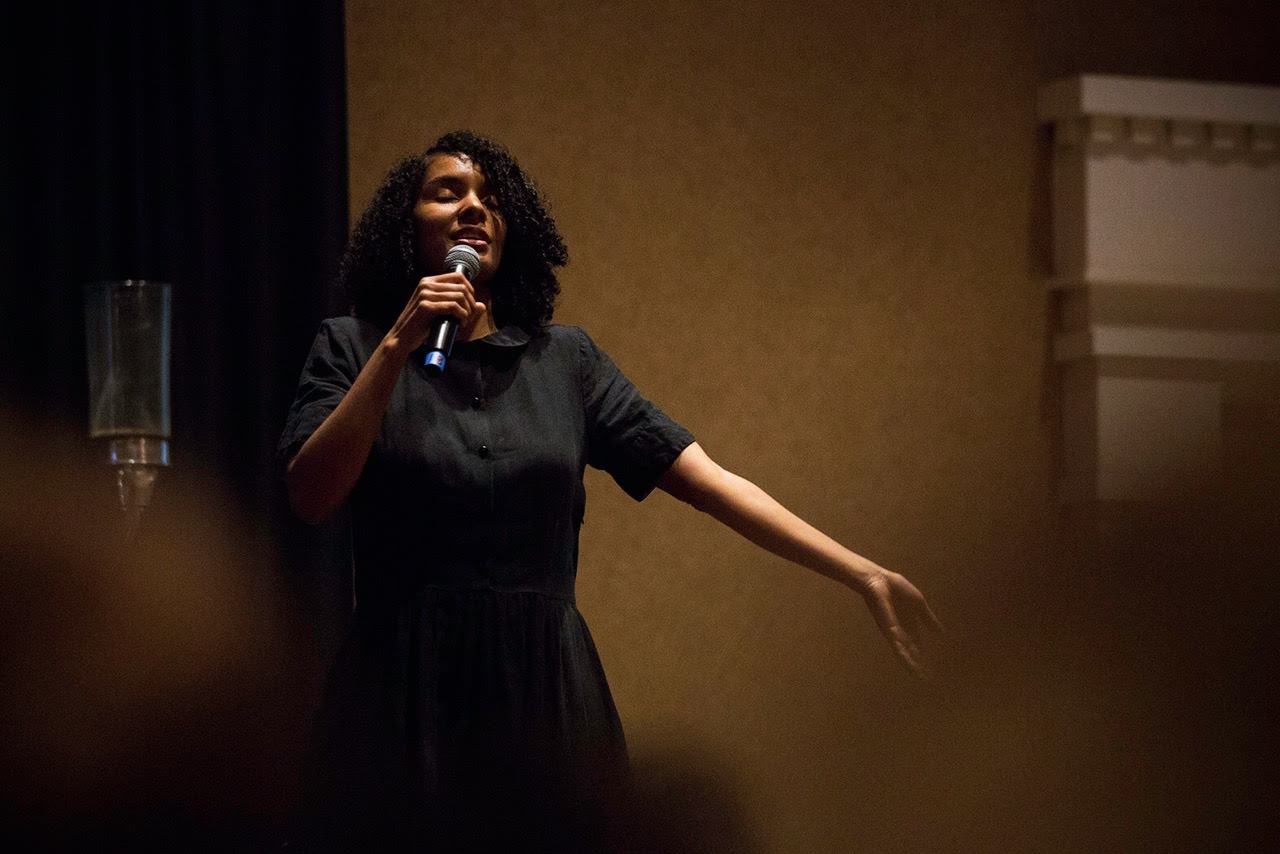
By definition of what I've been doing lately I guess you could call me a "national speaker". I've spoken all across the country in a number of churches, schools and institutions; have been interviewed for various media and written material; and have even had to turn down some invitations because of a schedule that can't fit anything more.
When I reflect on this, I'm tempted to laugh, but I'm mostly confused because I have no interest in public speaking. I'd rather read a book than speak about it, so I keep asking God the same question dear old Moses did, "Why me? Don't you want someone else?"
I have a very simple philosophy when it comes to God's will: God opens doors when there's a path I should walk and God closes doors when I need to look elsewhere. God has shown me where to turn by making things happen that I couldn't have accomplished on my own (like when I took the wrong test to apply for the School of Education and was admitted anyway); or by giving me "no" as an answer when I wanted to hear "yes". Sometimes a "closed door" has been simply knowing in my heart that I'm not pursuing what I know I should be, and I'm not at peace until I listen.
As I see all these doors opening for me to walk into schools and parishes, it tells me that this is where God wants me right now. The invitations wouldn't be coming if God had other plans in mind. Even still, while this may be what I do, it doesn't really feel like who I am.
The other day I was preparing to lead a retreat for high school seniors. I always get nervous before presentations and retreats because I want to offer the best and leave people with something they can really use in their relationship with God. The night before this particular retreat I prayed, "Lord, please help me to be who you need me to be for these students." In that moment my mind quieted and I felt the Lord say, "I don't need you to be anything. Just be yourself." It was both comforting and unsettling. I wanted more guidance than that, and yet I knew that was truly all God wanted.
So if my doing is not my being, then I suppose it is not so much what I share as it is who I share. I have been trying to fit the role of how I view public speakers - as dynamic extroverts with lots of things to say. Instead, I need to find a way of public speaking that is me - a friendly introvert with lots of things on her mind.I wonder how many people get stuck trying to fit a role as it is commonly cast. How do we break free? How do we re-imagine the role so that we can still do what needs to be done, but in a way that gives us space to be us?
The photos you see in this post were taken by Carlos Trujillo during a talk I gave in Albuquerque,
NM. They say so much of who I am, and yet give the impression that I am a speaker and a performer. I consider myself neither, but, in the words of Mother Teresa, I do consider myself a pencil in the hand of God. Who am I to decide what story God should write with me, or how it should be written? It is enough that God should want to write with me.
So, as I continue to be entrusted with a stage and a microphone, I will do my best to make the most of it. Considering that Lent has just begun, perhaps I could use it as a time to further explore how to be in all that I do. Please pray for me as I pray for you.
Sister Desiré Anne-Marie Findlay
Thursday, October 3, 2019
The End of Doubt
![]() |
| Kate Buckley Photography |
In preparation for the big day, we spent several weeks throughout the year in prayer and conversation. It was a year of reflection, but even the day before the day I thought to myself, "This final vow ceremony is pretty much just a formality. I've been living the vows for six years already, and nothing changes after this. I'll still be doing what I've been doing and living where I've been living. It's no big deal." Oh, but it was a big deal.
When we processed into the chapel at the start of Mass, joy flooded my heart with wave after wave of
![]() |
| Kate Buckley Photography |
I don't remember much else, but I do remember that I wholeheartedly enjoyed the music. I'm a dancer by nature, but I fervently sang along to songs that had been a part of my journey from the beginning and songs that had connected me with my sisters over time. Basically I was just enjoying a rather fancy and personalized Mass; but then came the reception of the ring. I stood at the front of the chapel while the priest held up a simple silver ring. I'm sure he said something very profound and I probably responded with "Amen" but all I really know is that as soon as the ring made its way onto my finger, a sudden and slow explosion began to go off in my mind.
![]() |
| Kate Buckley Photography |
As I continue to reflect on that moment, I realize that I was not only living with an awareness of other options, I was living as if I might choose one of them instead. I loved my community from the beginning, and felt all along that God had been inviting me here, but even then I hadn't fully given myself all of those years. Not only was I holding onto those other options subconsciously, but I was living them subliminally. I was not going on dates or flirting, of course, but neither was I 100% invested in my call to religious life. I was living it knowing that it could potentially be temporary, halfheartedly showing up to prayers and never giving a thought to how it affected others. That ring changed everything.
It makes me think of the Catholic Church's firm stance on couples not living together before they get married. I always knew it was important, but I never really paid attention to why it mattered so much. With this new understanding of commitment, I'm finally "getting it". When two people live together before marriage, they know in the back of their minds that the person they're with is still just one option out of many. They may not say that out loud, but it's subconscious, and so at some level they will live that way, too. It may not come in the form of physical betrayal, but it's hard to invest oneself fully in a commitment when it still just remains an option. At the same time, the other person knows that they remain simply one option out of many. Thus, marriage becomes a way for a couple to say to one another, "Out of all the options out there, I choose you. I choose to give myself fully to you and to nothing and no one else."
My little ring has become a symbol of just that. On August 15th I said to God, "Out of all the options out there, I choose you. I choose to give myself fully to you and to nothing and no one else." So here I am, committed to no one and everyone all at once, serving through the charism of my beloved congregation. Where will it lead me? I have no idea, but I am content in knowing that "I have found the One whom my soul loves" (Song of Solomon 3:4).
![]() |
| Kate Buckley Photography |
Wednesday, July 3, 2019
The Elbow
I recently traveled to Holly, MI for a program sponsored by the Felician Sisters called "Seeds of Hope", which is a youth leadership experience for young women going into their sophomore or junior year of high school. This was my fifth year helping out; every year I walk away with something to ponder, and this time it's a moment of personal reflection that still has me fascinated.This year our program was graced with a new speaker, Erricka Bridgeford, a co-organizer for the "Ceasefire" weekends in Baltimore who appeared on TEDx as a result of her efforts. She spoke about "The Power of One" to our group of young women and walked us through an exercise that would help us envision our unique and essential place as a single member in the fabric of humanity.
"Close your eyes," she instructed. We did so very obediently since Erricka is not a force to be reckoned with, but also because her entire talk throughout the morning had held our attention like nothing else. We didn't want to miss anything she had in store for us. "Imagine a huge body. It could be male, female, just picture a person larger than normal." She let us sit there in silence, fashioning our people. I imagined a genderless being, large, but not quite the size you'd imagine a giant from a fairy-tale. "Imagine all the parts at work," she said, gently focusing our minds. "Think of whatever you can: organs, limbs, hair. Think of it all working together." I pictured little people all making up this big person of mine. They were holding hands, going about their work, but careful not to let go of one another. I liked picturing humanity that way. It made me see more clearly the reality that we are one big life depending on all the parts for strength. "Now," Erricka continued, "think of yourself in there. Where are you? What are you? Are you a finger? A nose? The heart?" Again, she gave us time to think about what vital piece of the body we might represent.
I didn't know where to start as I tried to imagine what part of the body I might be. A few things came to mind, but it didn't take long until an image popped into my head and I knew right away it wasn't just me looking for an answer. I saw myself in that giant body, resting contently in the elbow. The elbow? I thought. Even though the image gave me peace, I couldn't understand why I would picture myself there. Why would I be an elbow? Getting into a thinking position, I leaned over in my chair, placed my elbows on my thighs, and that's when I understood it. The elbow. It's hidden, right there in the back of our arms, not even visible unless you bend awkwardly to get a good look at it; but it's an important place of support. It helps to hold us up when we are tired; allows our arms to stretch and bend; it even springs into action and aids us in breaking a fall. That silly little elbow has so many jobs, and yet it's not in any noticeable place.
Why not give it a try! Follow Erricka's promptings and see which part you are. Don't force it, just let the image form as you imagine all the parts of the body working together. You'll know which one you are when it comes to you. Once you feel sure, even if it seems odd, take some time to ask yourself some questions. What makes this body part represent me? What is my job in the body of humanity? What is it that I do for others because of my unique place in the body?As always, thanks for reading! Many blessings as you do your part to hold up humanity,
Sister Desiré Anne-Marie
Monday, April 29, 2019
An Easter Poem
Thursday, November 29, 2018
The Heart of a Mother
When I ask a young woman whether or not she has considered the possibility of religious life, if she says, "No," it's often followed by, "Because I want to get married and have children." Oddly enough, a lot of Sisters I know said the very same thing when someone had asked them the very same question. Despite all the gender stereotype and social construct arguments, I do believe that our bodies are deeply connected to our souls. The womb of a woman is not just another body part, but is central and sacred, even the womb of a woman physically unable bear children. The space within us tells us that we are bearers of life, that we can carry another human being within ourselves. It makes sense, then, that a young woman's hesitation to religious life would be the relinquishing of such a gift. But is it something we actually relinquish?
I didn't think too often about having children until I was a novice and my sister was pregnant with her first child. The mystery and excitement of it all paralleled a deep sadness that began to run through me. Being the older sister by only a few years, my younger sister and I had always been very close. I had often experienced life's challenges first which gave me the ability to help guide her through similar challenges later. That was not the case this time. I couldn't understand what she was going through and, I realized, I never would. "We'll never be able to swap giving-birth stories," I thought, "Or watch our kids play and grow up together." I would smile whenever we spoke on the phone, but at night I would turn to my pillow and cry.
![]() |
| Roller-coasters with my favorite nephew |
![]() |
| Twinning with my favorite niece |
That maternal love is extending now, further and further, as I spend more time with the youth in our country. During a retreat this month I had the opportunity to speak one-on-one with a handful of high school students. I was surprised by the level of despair and pain with which they came to me. They were carrying tragedy and questions that I never had to deal with so young. As I listened to them I longed to carry it all for them. I found myself asking God how I could help lighten their loads, or how I could help them discover the abundance of God's love for them. I would sometimes look out at all of them during quiet moments of prayer, just to take in every little hair on their precious heads. I imagine that's how a parent feels - wishing they could take away their child's pain, whether it's a scraped knee or a deep heartache; or watching their child, toddler or teen, during some simple activity and feeling overwhelmed with gratitude for the gift of their lives.Maybe I thought I was giving up a huge part of my life when I realized I wouldn't be having children; maybe I felt like I was sacrificing my own child the way Abraham must have felt as he held the knife over Isaac; but God's invitation is always followed by lavish, life-altering love. That's what I found instead of sacrifice and emptiness. I am discovering each day a love that is as true as any I could have hoped for. I guess my answer to the question "Don't you want to have children?" will now be something more along the lines of, "Of course! That's why I have hundreds."
Friday, August 17, 2018
The Famous Question
During our week at camp, every activity we did was discussed during a debriefing time when campers and camp leaders would talk about the day's events in light of their relationship with God, themselves, or others. It reminded me of the question that so many spiritual directors love to ask: "Where did you see God in this?" The famous question.
On Sunday, July 22nd, Emily's wonderful mom gave me a ride up to Muskrat Cove at Moraine State Park where I met the rest of the retreat leaders. We cooked, cleaned, set up tents, put together an outdoor chapel, laughed, ate, took pictures, and got ready for the eight retreatants who arrived the next day. They were young women in all levels of high school and from different areas of the Diocese of Pittsburgh. They all looked nervous when they showed up Monday since most of them did not know each other or the camp leaders, but it was easy to see that they were all excited to be there. I was excited too, except for the white water rafting we'd be doing on Thursday. I was not excited for that.
| Rock climbing - it's not as easy as it looks |
I read the book I Am Malala by Malala Yousafzai and it reminds me of something she said the doctor had told her father when the hospital was getting ready to transfer her for recovery after she was shot. Her father had expressed gratitude in the fact that God had sent those specific doctors to his daughter's aid right when she needed them most. The doctor, Dr. Javid Kayani, replied, "It is my belief God sends the solution first and the problem later" (pg. 269). It felt the same for me - although in much less drastic circumstances - God had already given me a solution. The solution was my strong dancer legs, so instead of trying to come up with my own solution by using my arms, I needed to trust that God had already equipped me for the task at hand. I saw a clear parallel in my rock climbing adventure with implications for daily life: I have already been given certain strengths with which to navigate this life, and I'll only be able to find my way if I use them.
When Thursday came around I woke up with a pounding headache and thought perhaps it was a sign. As you may recall from my post about the Holy Land, drowning is one of my biggest fears, so with a headache on white water rafting day I figured it meant I shouldn't go since I might not make it out alive. I seriously considered staying behind and had an interior battle before getting into the van. I thought, If I don't go I'll miss out on time with the campers. Maybe I won't die. Maybe I'll be fine. No, this headache is terrible. I won't be fine. I'm going to die. Even with that conclusion, I somehow convinced myself to line up for the van.
Halfway to our destination, we missed our exit on the highway. Usually you can just turn around without too much of a change in your estimated time of arrival, but not on white water rafting day. Once the GPS rerouted us we got 30 minutes added to our trip. Instead of arriving right on time at noon, we were now going to be a half hour late. To me, that was another sign. Emily gasped in a panic. "They'll leave without us!" she said. "The paperwork clearly states that if we don't get there on time, the group will leave without us." She sat in shock for a moment as I silently thanked God that we missed our exit. This must mean I was going to die! Now we're definitely not going white water rafting. Thank You, Lord. "Wait," Emily said, "I'll just call and tell them we missed our exit. Maybe they'll understand." She made the phone call and the very kind woman on the other end said they would wait. I was disappointed. So there's a chance we'll make it, I thought. Great.
When we finally got rerouted it seemed that all was going smoothly until suddenly the tires on the van screeched and the wheel locked. The camp leader who was driving slowed down, pulled over to the side of the road and took the keys out of the ignition. We sat for a moment, wondering what could have possibly happened and I uttered another silent sigh of relief. We're definitely not going to get there now. Good! Our driver tried restarting the van, but it fought back while I tried to fight back my smile. She tried it again, but to no avail. I held my breath on the third try and suddenly it started. Ugh. But I was still holding out hope that we would not get there in time.
Nope, we were on time. Figures, I thought. Now all I can hope for is that I don't die. Please, God, don't let me die.
As the guides were giving their instructions, I practiced every move they described. I tightened my life jacket until I could hardly breathe, just as they suggested, and we set off for the rapids. Our group was split up into three rafts and I ended up with four teenagers and only one adult who had been white water rafting just once before. She was younger than me. I looked at my crew and thought, Yup, today is the day. My earthly pilgrimage is over.
We started out nice and slow in our bright yellow raft. There were about five other rafts on the trip with us, plus a rescue raft and our two guides in their kayaks. The river was moving pretty quickly, but didn't seem too threatening. It was almost like an exciting lazy river ride. Our guides called out directions, telling us what was up ahead and explaining whether we should stay to the middle, left, or right. As soon as we hit our first rapid, I was immediately in love! I couldn't wait for the next one! We went a total of 7.4 miles downstream that day, and at the halfway point we all stopped for a lunch break. Plenty of people had fallen out of their rafts during the first half of the trip, but none of us in my raft had. We were so proud of ourselves and our great teamwork! We had almost tipped over once, with water rushing in as we slumped halfway off a rock, but we had narrowly avoided the disaster and used it as an excuse to build our pride.
Once we got back in the water we were feeling more confident and were happy to know we still had another few miles of rapids left. At one point, one of the guides was explaining that there was a hydraulic ahead. He said, "This is the spot where plenty of rafts get flipped! You need to watch out and make sure you avoid it. If not, then hit it straight on and with as much speed as you can, because if you're turned sideways or going too slowly, your whole raft will flip over." We listened intently and followed the group along as we watched for this infamous hydraulic. When our guide shouted that it was just ahead, we saw it, but there was nowhere to go. There was a raft on our right and a bunch of rocks to our left - we were headed straight for it. Without enough time to fight the swift pace of the river, the nose of our raft turned and we were headed slowly toward the hydraulic at a crawling pace, exactly the way we were not supposed to. It all happened just like our guides had explained during the instructions, "If you fall out, everything will go dark and wet." It sure did. Dark and wet, I thought. Yup. But then I remembered his next words, "Don't panic. You'll float right back up to the surface. Just stay calm." I paddled my arms a bit as I came up and then there I was, back in the sunlight. I stayed calm, just as he said, because I realized that there were rules in place to keep me safe, so as long as I followed those rules I would be just fine. His words kept coming to me, "Once you come back to the surface, make sure you get your legs pointed downstream. Don't try to swim, and don't try to stand either. There are plenty of rocks and crevices your feet could get stuck in. Just get your feet pointed downriver and float." I realized my head was pointed downriver, and even though we were wearing helmets, I still didn't like the idea of hitting my helmetted head on a rock. I turned myself around and floated downriver with my feet out in front of me. I grabbed two of the paddles floating next to me and marveled at just how calm I was. Eventually the guys in the rescue boat reached out and pulled me over using the paddles I was holding. They quickly took hold of my life-jacket and pulled me up by it. I was so glad I had tightened it just like the guides said, otherwise I would have slipped right out. After that, they gave our paddles back and promptly returned us to our raft.
When we were talking about the rafting trip afterward, my little crew was still in awe over the experience. Almost all of us had loved it - even the falling out part - but one girl from our raft said she had been terrified the whole time. However, when our raft flipped, she explained that her consolation came from the fact that there were others in the water with her. I hadn't thought about that aspect, but I realized when she said it that it had been a consolation for me as well. I was comforted by the fact that I wasn't the only person adrift, but that my whole team was with me. I joked later that our teamwork was the best because we were either all in the raft together, or we were all in the water together.
It made me think about how important it is for us to be with people during their time of need. Of course we need people there to pull us out of the water when it's time, but we often need to feel like people are with us in the water. When I'm feeling upset or distraught about a personal situation, I don't always need saviors. Sometimes I just need someone who will say, "I understand. I'm here. I'm with you in this. We'll get out together."
These are just some of the places where God showed up for me at Camp Lajas: in learning to trust the gifts God has given me; in better understanding what it means to work as a team; and in realizing just how important it is to be at the side of those who feel alone in their struggles. So, back to the famous question: Where did you see God in this... summer / post / year ? If you want to know where God is at work in your life, this question is a good place to start.
Wishing you peace and plenty of adventures,
Sister Desiré Anne-Marie Findlay
Tuesday, May 29, 2018
Bring Me Your Sick and Suffering
Today was my first time walking with a team of student nurses through the small neighborhoods of Jacmel, Haiti. We were lead by Sister Marilyn who had visited a few people the day before and promised a return visit. They were all waiting outside on their porches and steps when we arrived, eager to receive help from this group of healers. You could see the hope in their eyes and the excitement as they called on their children and grandchildren to search for chairs, offering a place for the nurses to sit. Sister Marilyn translated as people shared their aches and pains, burdened by illnesses they couldn’t understand or afford. People would stand around and listen, curious and watchful, but then more people would start to show up, just like they would with Jesus. We would finish with one person, and then someone would lift up their child onto the porch - “She doesn’t have an appetite,” they would say, concerned for their little one. The team of nurses would then discuss the possibilities as Sister Marilyn translated their questions. After granting small doses of medication, another neighbor would bring their elderly mother. “She has terrible headaches,” they’d tell us, and then all would watch, amazed, as the nurses checked blood pressure, took temperature, and pulled bottles of medication out of their bags.
We were almost finished with one home visit in particular when the small crowd parted to let a young man come through. We all winced as he walked up the steps, slowly and carefully, suffering from what looked like road burn. It turned out he had been near a propane tank when it exploded, leaving burns and blisters on his arm and face. The student nurses quickly began surveying the damage. After gathering all the necessary information, they cleaned the open skin with peroxide, then gently applied antibiotic ointment to the affected areas. When it was particularly painful, the young man would close his eyes, but his face was still covered with signs of relief, knowing that he was getting the help he needed.
As I observed the nurses and their patients, it was like watching people flock to Jesus; people with a hope big enough for miracles.